
Clinical information · Chennai
Gynecomastia Surgery in Chennai
Understanding gland, fat, grading and treatment considerations
Puffy nipples, excess gland and stubborn chest fat can look similar — but they don't always require the same treatment. Start by understanding what is actually causing your chest enlargement.
- Understand puffy nipple prominence
- Learn how gland and chest fat differ
- Review assessment and treatment considerations
Take the 60-second chest assessment
Educational information · Individual assessment is required
Does this sound like you?
Does This Sound Like Your Inner Voice?
Many men silently live with these thoughts every day without talking about them.

I never remove my shirt at the beach.
Months in the gym, no change.
I always wear loose T-shirts.
I cross my arms instinctively.
My nipples show through my shirt.
Lost weight, chest still there.
If several of these thoughts feel familiar, you’re not alone. Many men experience the same concerns. The next step is understanding what is actually causing your chest enlargement.
Start here
Do I have gynecomastia?
Dr. Charan explains the common signs and how gynecomastia differs from ordinary chest fat.
Still unsure? Answer a few questions about your chest.
Take the 60-second assessmentRequest an online appointmentInteractive Assessment
Could your chest enlargement be gynecomastia?
This short assessment cannot diagnose your condition, but it can help you understand what may be contributing to your chest appearance. It takes less than 60 seconds.
How old are you?
Fat or Gland?
Understanding what is causing your chest enlargement
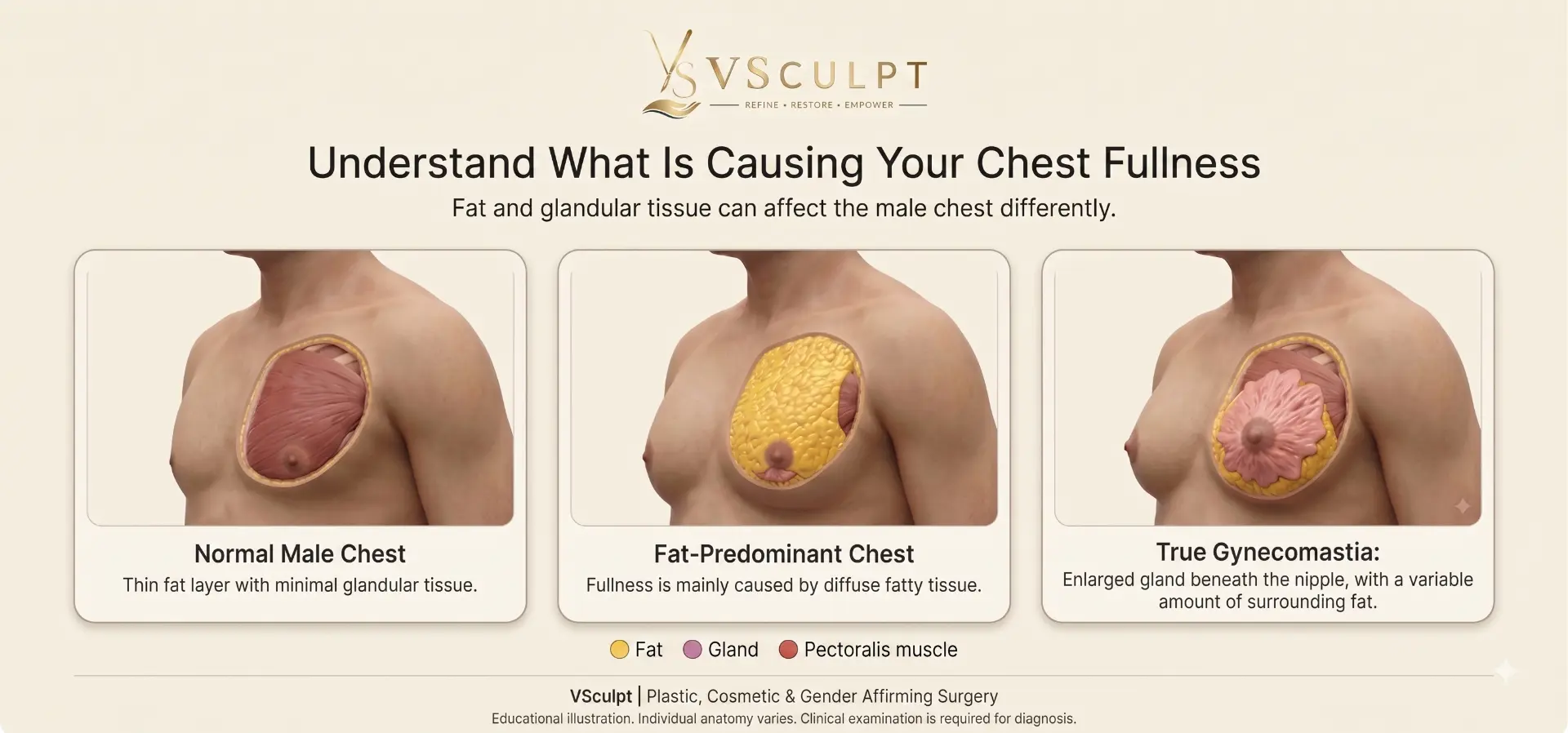
Fat and glandular tissue affect the male chest differently — and each needs a different approach.
Swipe to compare →
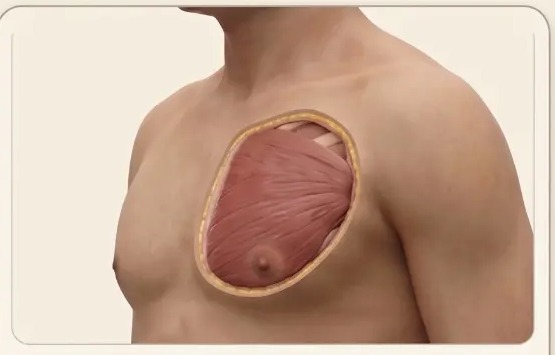
Normal Male Chest
Thin fat layer with minimal glandular tissue.
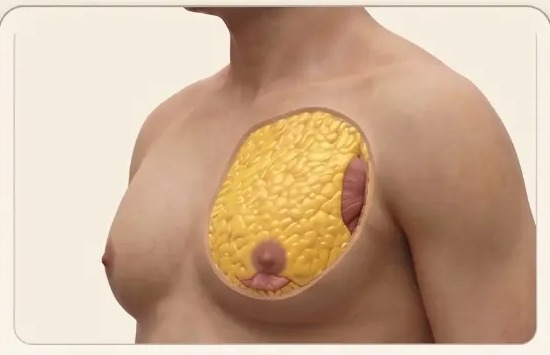
Fat-Predominant Chest
Fullness is mainly caused by diffuse fatty tissue.
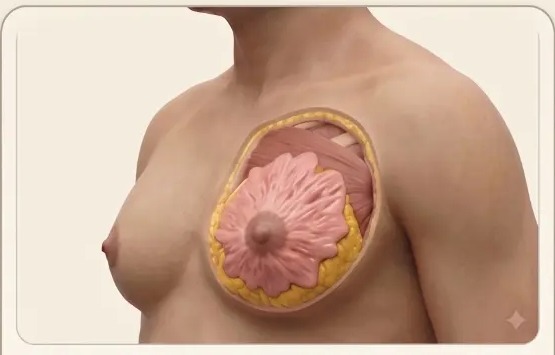
True Gynecomastia
Enlarged gland beneath the nipple, with a variable amount of surrounding fat.
- Fat
- Gland
- Pectoralis muscle
Understand your grade
Not every gynecomastia chest is the same
Grades differ in gland, fat, skin excess and nipple position.
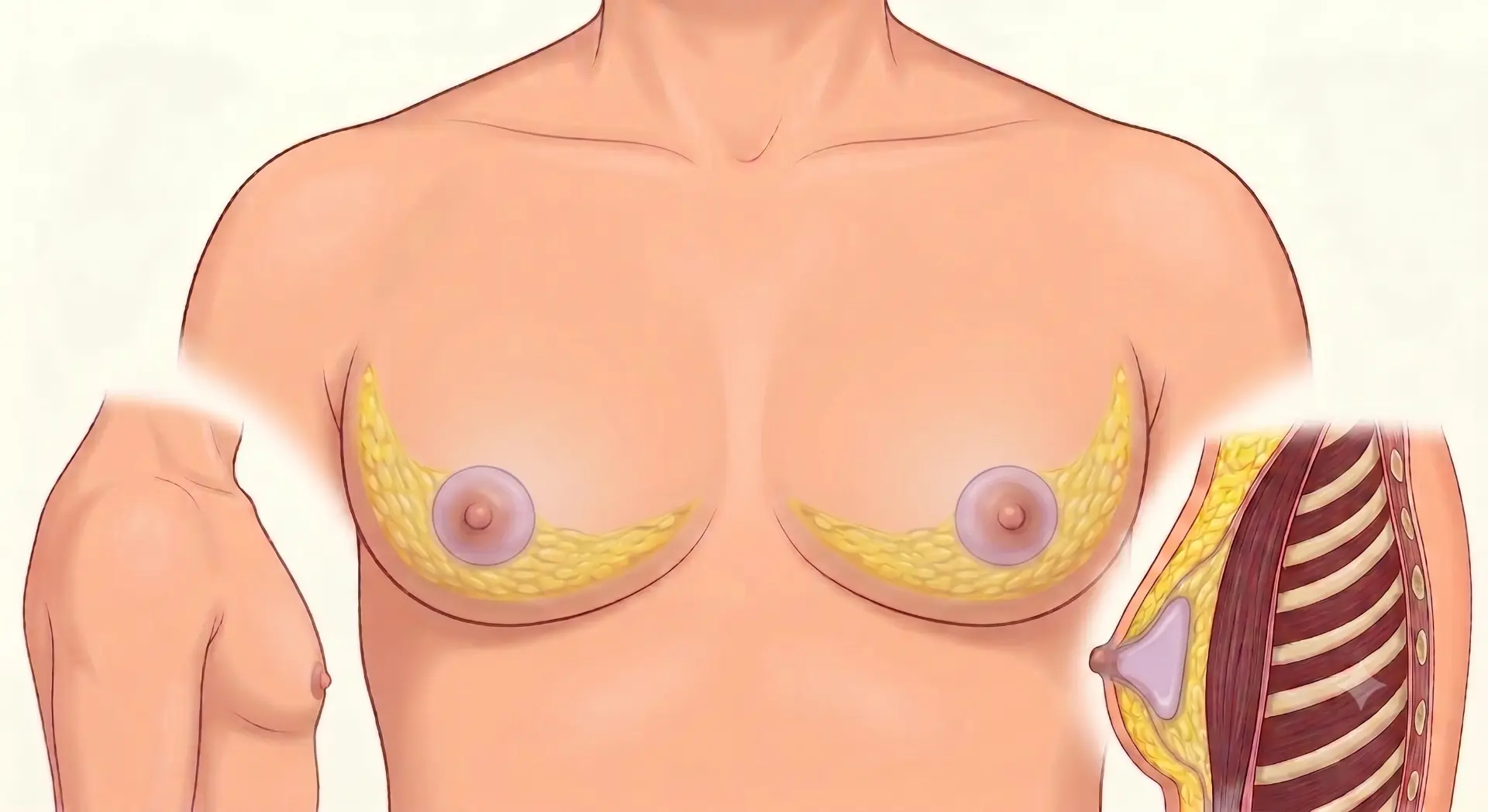
- External appearance
- Puffy nipple, otherwise a normal chest
- Gland / fat
- Small firm disc of gland beneath the nipple
- Skin excess
- No excess skin
- Nipple position
- Normal position
Educational only. Grade cannot be determined from photographs alone — a physical examination is required.
Not sure which resembles you?
Clinical assessment
Assessment and treatment planning by Dr. Charan J.C.
MBBS · MS (General Surgery) · MCh (Plastic Surgery) · Fellowship in Aesthetic Surgery
What Dr. Charan Assesses
Your surgical plan is based on all six — not just the size of the gland.
Direct Surgeon Assessment
Your chest is personally assessed and treatment planned by Dr. Charan.
Contour-First Approach
Treatment considers gland, fat, skin and chest proportions rather than simply removing tissue.
Related Chest Procedures
Assessment may draw on relevant principles from aesthetic, breast and gender-affirming chest procedures.
Structured Follow-Up
Recovery, compression, scar care and return to activity follow a planned postoperative pathway.
Appointment requests are patient-initiated and subject to clinical availability.
Deciding
Would surgery help me?
General considerations only. Clinical assessment is required before treatment can be recommended.
You may be ready to consider surgery
- Persistent chest enlargement
- A stable weight
- Puffy nipples or firm glandular fullness
- Exercise hasn't corrected it
- Medically fit for surgery
- Realistic expectations
Sometimes waiting is better
- Recent pubertal changes
- Major weight loss still planned
- Recent unexplained enlargement
- Uncontrolled medical condition
- Ongoing contributing drug or steroid use
- Diagnosis remains unclear
The procedure
How is it treated?
The approach depends on your anatomy — not every patient receives the same combination.
Liposuction
For excess fatty tissue and contouring.
Gland excision
For firm glandular tissue beneath the nipple.
Combination
Frequently used when both gland and fat contribute.
Honest answers
Will I have a scar?
- All surgery produces scars — the aim is to place them discreetly.
- The incision pattern varies with the technique used and the severity of the enlargement.
- Scars typically mature and soften over many months.
- More extensive skin reduction procedures require additional scars.
Where appropriate, incisions are commonly placed along the areolar margin. Scar position, length and visibility vary with anatomy and technique and are discussed during clinical assessment.
Surgery → aftercare → recovery
What does recovery actually look like?
Surgery day
Procedure, compression garment applied, and discharge or recovery instructions.
First few days
Swelling, soreness and dressings; gentle walking is usually encouraged.
Week 1
Review, wound care, and drain management or removal if a drain was used.
1–2 weeks
Many patients progressively return to non-strenuous work and routine activity.
4–6 weeks
Gradual return to exercise after surgeon clearance.
3–6 months
Swelling continues settling, scars mature and the contour becomes progressively clearer.
Recovery varies between patients. Your individual restrictions and timeline will be provided after surgery.
Good to know
Everything else you may want to know
Making an informed decision matters. Possible surgical risks, recovery limitations and symptoms that need medical evaluation are explained below.
What does gynecomastia surgery cost?
Packages starting from ₹60,000
Your final package depends on the grade of gynecomastia, surgical technique, anaesthesia, hospital requirements and your individual treatment plan.
Request appointment informationAppointment information
You don't need to keep guessing what's causing your chest enlargement
A private consultation can help determine whether your chest appearance is primarily related to gland, fat, skin excess or a combination — and whether treatment is appropriate for you.
Appointment requests are patient-initiated and subject to clinical availability.
Want to understand gynecomastia in greater detail?Read Dr. Charan's complete gynecomastia guide